Chess - an analogy for conversation
Visualizing conversation as a game of chess could make it more tangible.
On my first day studying engineering, this was displayed at the front of the lecture hall:
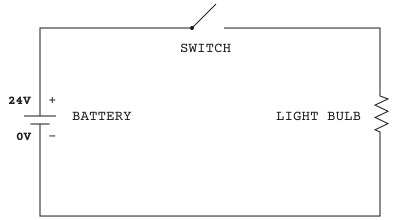
It's an electrical circuit diagram. It shows how electricity moves from a battery, through a switch, to a light bulb. It was difficult to understand how this works because it's invisible. I just had to trust that on one side of the battery, the electricity was at 24 volts (whatever that is) and on the other side, it was at 0 volts (he called that 'ground'). The 24 volts electricity wanted to move to ground and, if it happened to pass through a light bulb on the way, it would light up. The lecturer then changed the image to an analogyanalogy: comparing one thing to another — typically to make something easier to understand. of the circuit:
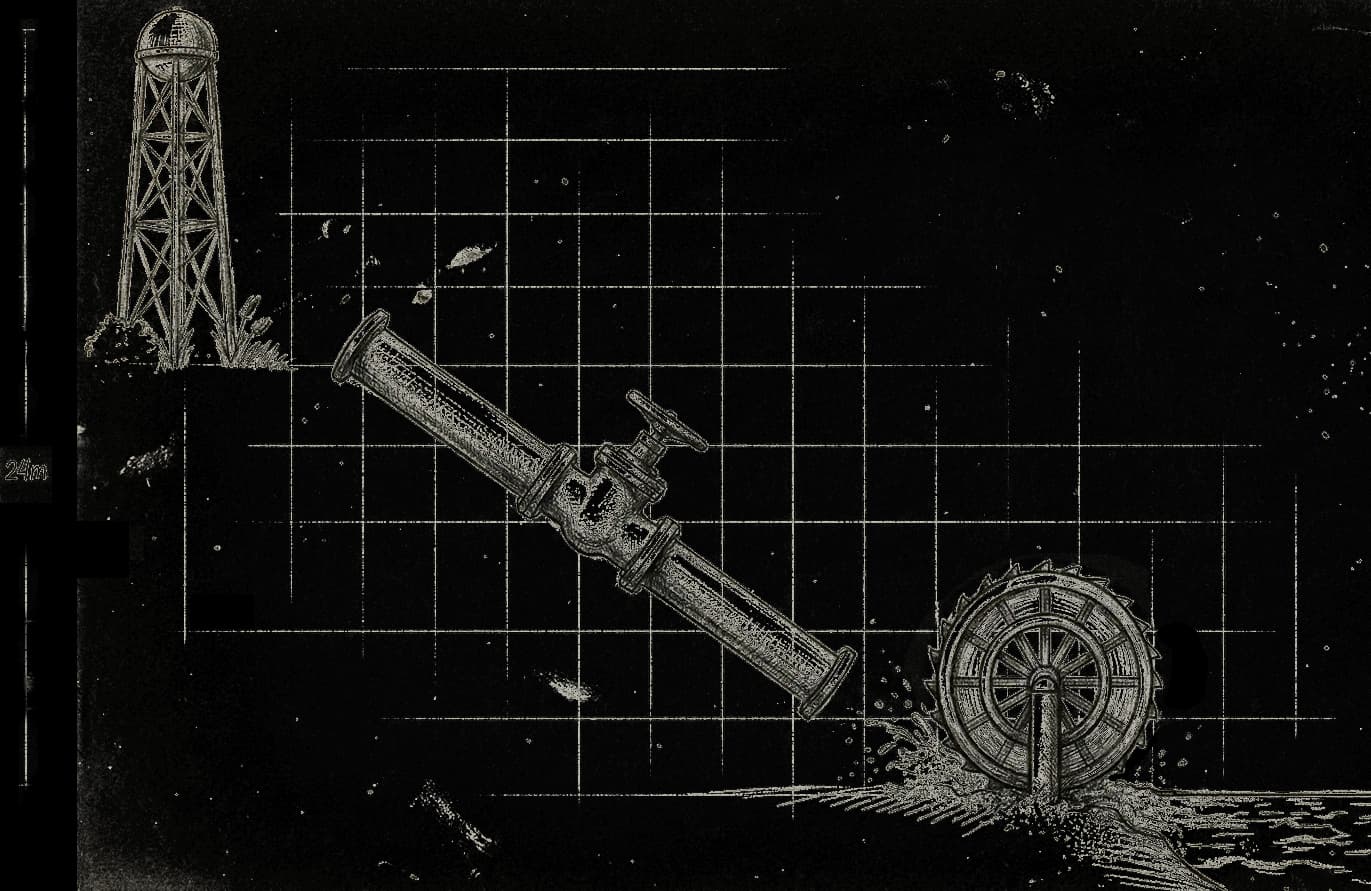
The battery replaced with a water tower 24m above sea level. Wires, switch, light, and ground replaced with pipes, a valve, water wheel and the ocean. Instantly, everything made sense. I understood how water above sea level flows down because of gravity. That flowing water has energy can be used to turn a wheel. That when this water reaches the ocean, it loses this energy. Whenever I was presented with an electrical circuit problem, I would convert to a water system, which made it easier to solve.
Like electricity, conversation is invisible. Although words spoken between two people can be heard, it's what is going on inside those people's heads that make it what it is. I've been thinking if there is a good analogy for conversation. Something to visualize that would make it easier to talk. I started with tennis, changed to hackie sack, then landed on chess. I imagine it something like:
Set up the board
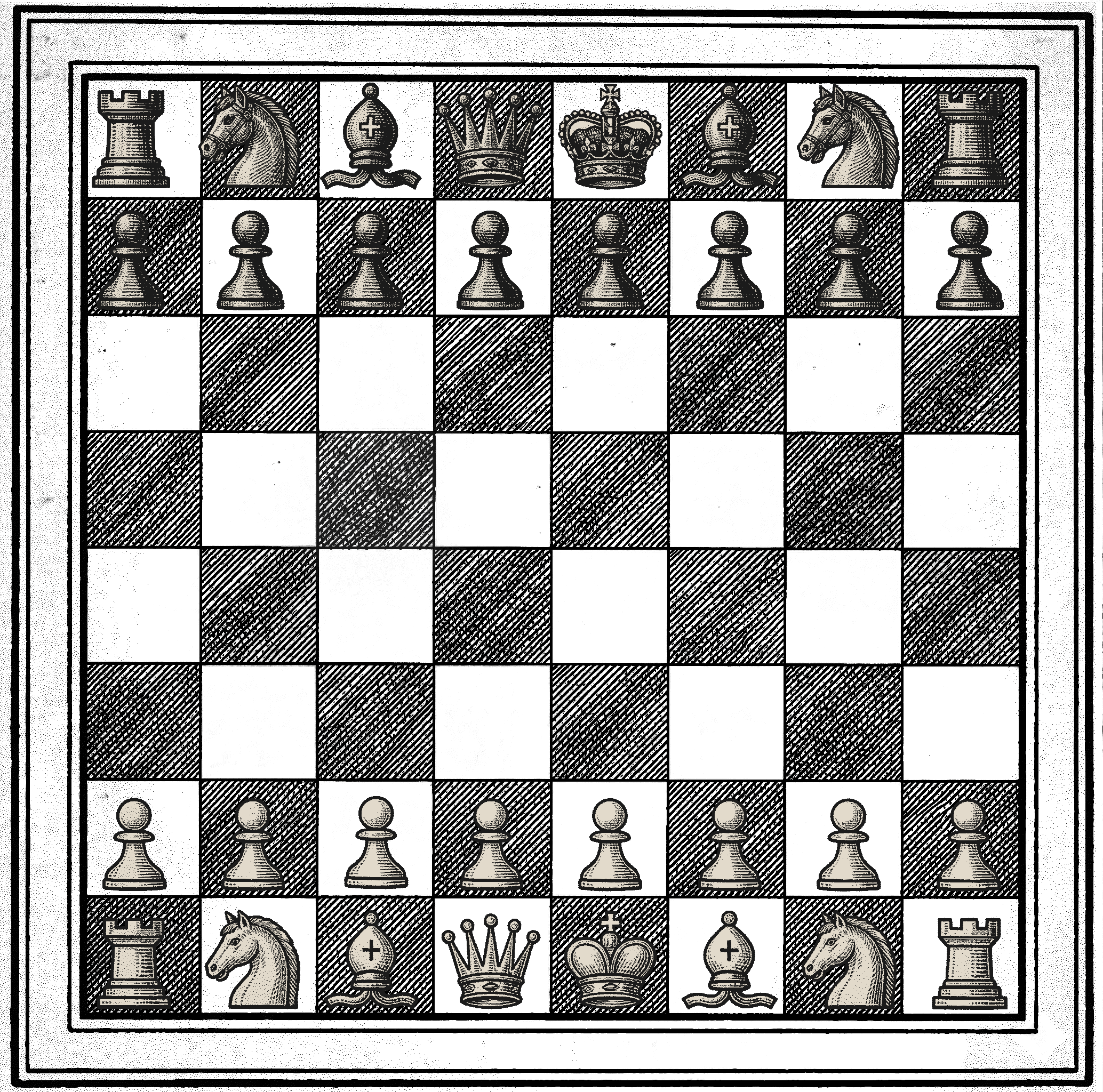
When I sit down to talk to you, I imagine setting up a board. If we haven't met before, all the pieces are in their starting positions. You have a line of pawns that I need to manoeuvre past to reach the high value pieces — the small talk that leads to deeper conversation.
However, if we're friends, our game started long ago. Pieces are positioned from where we left off last time we talked. Visualising this gets me thinking about that past conversation — priming me for this one.
Opening move
If we're starting a new game, I can advance a pawn one square forward — open with some small talk like 'how are you?' Alternatively, I can be bold and execute a pawn double-stepdouble-step: A pawn may advance two squares forward on its first move, provided the squares in front are empty. — pay you a compliment. A third option exists for my knight to jump my pawn line — unloading my problems onto you. Overwhelming for a stranger and best left for a more established board.
On an established board — starting a conversation with a friend — small talk isn't required. It would be comfortable to go straight to talking about thoughts and feelings.
Talking too much
Chess is a game of turns — I make a move, then you, then me, and so on. Similar to conversation — I speak, then you speak, and so on. Like casual chess, it's not timed. Each turn can take as long as needed — I could tell a long story and you could respond with a short question asking for more details. Varying time is part of the game but, eventually each player must finish their turn so the other can take theirs. Not doing so — talking too much or interrupting before you finish — changes you from a player to a spectator.
Game plan
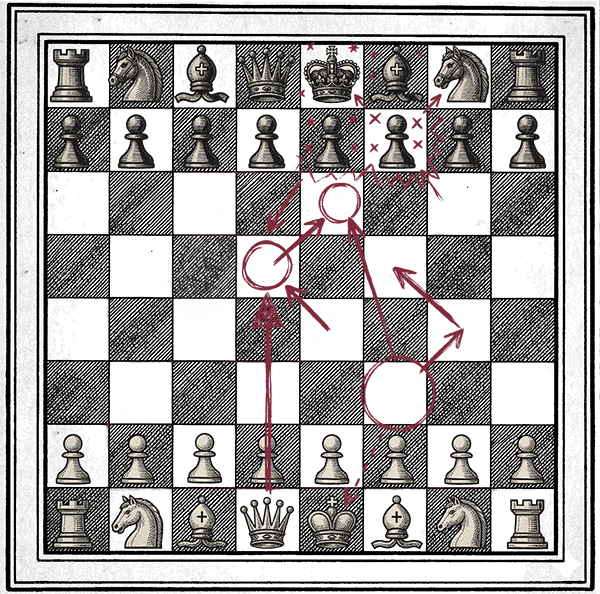
Chess requires adaptation. If I have a list of pre-determined moves that I'll make, regardless of what you do, I will lose. Like conversation, if I have a rigid idea of what I want to talk about and won't adapt based on how you respond, I'm playing by myself. I'm talking at you, not to you.
Defending
The other night I asked a friend their plans for the weekend. They replied with a joke that gave no information. I tried other small talk questions but got a similar result. It was like they were moving their pawns back to their starting position, protecting their back line — revealing nothing. My intent was to start a conversation. I don't know what their intent was.
One possibility is they want to talk but can't. They don't know how, they're shy, distrustful or have low self-esteem. In this situation, leading by example can be a good move. Move a high-value piece into a vulnerable position — talk about what I'm doing on the weekend. Showing I trust them can get them to start trusting me.
Another possibility is they don't want to talk. We're trying to connect can feel like getting blood from a stone. I always keep in mind that I have the option to leave this game and find another.
Attacking
If I take one of your pieces, it's akin to hurting you. The higher value the piece, the deeper the hurt. Taking a pawn is insulting your taste in music. Taking a bishop is betraying your trust.
Once a piece is gone, the only way you can get it back is through pawn promotionpawn promotion: A pawn that reaches the opposite side of the board can transform into a queen, rook, bishop, or knight.. This requires I provide a path for one of your pawns to move to my backline and, for you to trust I won't take it. Akin to me asking for forgiveness. Even though you got your bishop back, you still lost a pawn. The board will never be the same. Hurting someone leaves scars.
Checkmate
This is where I diverge from the analogy. You aren't my opponent. My objective isn't to take your king. I don't want to win, I want to connect. To make strategic moves — to be deliberate with what I say instead of blindly voicing whatever comes to mind. To adapt to how you play — listen to understand. To consider what you want to hear, not just what I want to say.
Get notified when Talk launches — join the wait list: